
How Do Multifocal Contact Lenses Work?
If the text on your phone seems to be getting harder to read, or you keep moving a book further away, your eyes may be showing the early signs of presbyopia. This age-related change in near focus is common from the 40s onwards, and for many people contact lenses can remain a practical, flexible option as reading vision changes.
Multifocal contact lenses combine more than one focusing power in a single lens, helping you move between distance, computer and close-up tasks throughout the day.
Whether you already wear contacts or currently rely on glasses, Bayside Eyecare in Brighton can assess your eyes, prescription and daily routine to see whether multifocal contacts are a suitable option.
Why Reading Vision Changes With Age
What Is Presbyopia?
Presbyopia is the gradual loss of the eye’s ability to focus clearly at close distances. The natural lens inside the eye becomes less flexible over time, so changing focus from far away to a phone, book or computer screen takes more effort.
People often first notice that they need brighter light, larger text or hold their phone further away to read their messages. These changes commonly become noticeable in the early to mid-40s. Reading glasses and multifocal glasses are familiar options, and contact lenses for presbyopia can also provide near vision correction.
Common Signs Your Reading Vision Is Changing
Presbyopia often shows up in small, practical ways before people think of it as a vision problem. You may notice:
- Holding your phone or a menu further away to find a clearer distance
- Needing brighter light for reading or close work
- Finding fine print slower or more tiring to read
- Taking longer to refocus from a screen to something across the room
These changes can develop gradually. An eye examination can confirm whether presbyopia is the cause and help you understand which correction options fit your routine.
How Multifocal Contact Lenses Work
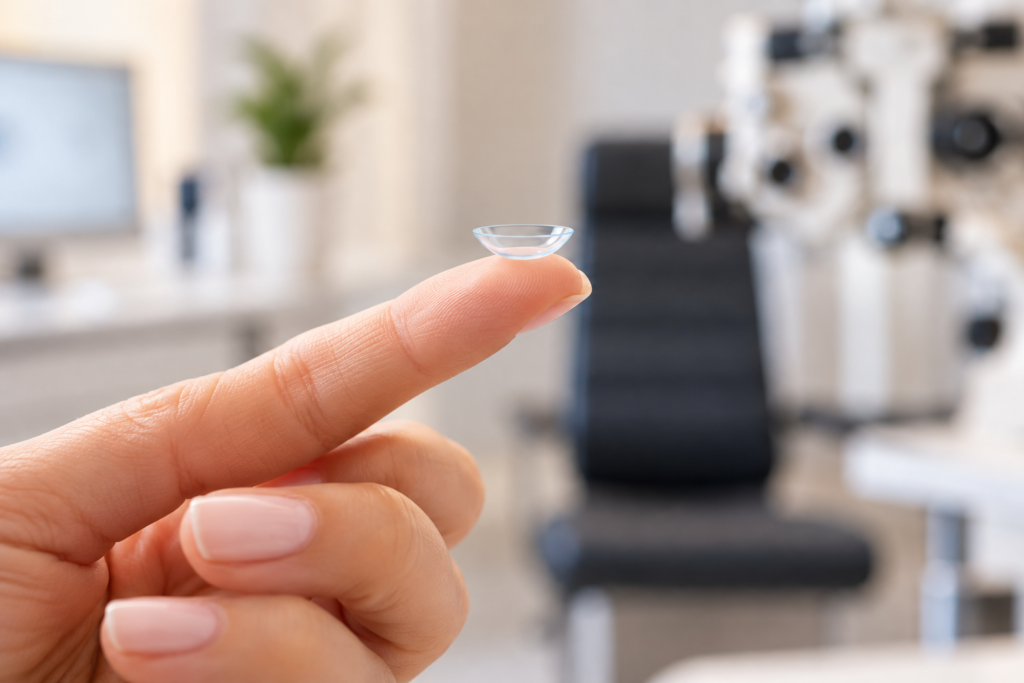
A multifocal contact lens contains two or more focusing powers. Depending on the design, those powers may be arranged in zones or change gradually across the lens. This gives your visual system access to distance, intermediate and near focus while the lens stays on the eye.
It can help with days that involve frequent changes in viewing distance, such as reading a message, working at a computer and then focusing across a room.
Understanding The Different Types Of Multifocal Contact Lenses
Multifocal contact lenses come in different designs and prescriptions. They are available as daily disposable or monthly lenses. They are made from silicone hydrogel, which is soft and comfortable and allows significantly more oxygen to reach the cornea than traditional hydrogel lenses.
Having different options gives your optometrist more scope to balance prescription, comfort, tear film and how often you want to wear your lenses.
How Your Eyes & Brain Find The Right Focus
Many modern soft multifocal lenses use a simultaneous vision design. More than one focusing power is presented to the eye at the same time, and the visual system learns to favour the clearest information for the task in front of you.
The goal is balanced, functional vision across the distances that matter most. Your optometrist can adjust the lens design and prescription when one viewing distance needs more support.
What It’s Like Getting Used To Multifocal Contacts
Adjustment varies from person to person. Fine print, low light and night-time tasks can feel more demanding at first, and some wearers require an adaptation period.
Your first trial lens at the fitting appointment is a starting point. Feedback from everyday situations helps your optometrist decide whether the lens design or prescription needs refining.
Follow-up appointments allow your optometrist to check comfort, lens position and real-world vision, then refine the prescription where needed.
Could Multifocal Contact Lenses Work For You?
- If You Already Wear Contact Lenses
If you’re wearing single-vision contacts and reaching for reading glasses over the top, multifocal contact lenses may let you keep wearing contacts while reducing how often you need that extra pair.
- If You’re New To Contact Lenses
You can start wearing contact lenses after presbyopia develops. Glasses wearers and people who haven’t previously needed vision correction can be assessed for multifocal contacts once close-up focus starts changing.
Multifocal contacts can also work as part-time eyewear. Some people use them most days, while others prefer them for work, exercise, social events or travel and keep glasses for other times. Your fitting can take that wearing pattern into account.
Your optometrist will consider factors such as:
- Your distance and near prescription
- Eye health and tear film quality
- Astigmatism or other prescription requirements
- Computer, reading and driving demands
- Sport, hobbies and lifestyle priorities
- How often you’d like to wear contact lenses
For a broader look at everyday eyewear choices, Bayside Eyecare’s guide to contacts vs glasses explains where each option can fit into daily life.
Multifocal Contacts Vs Reading Glasses
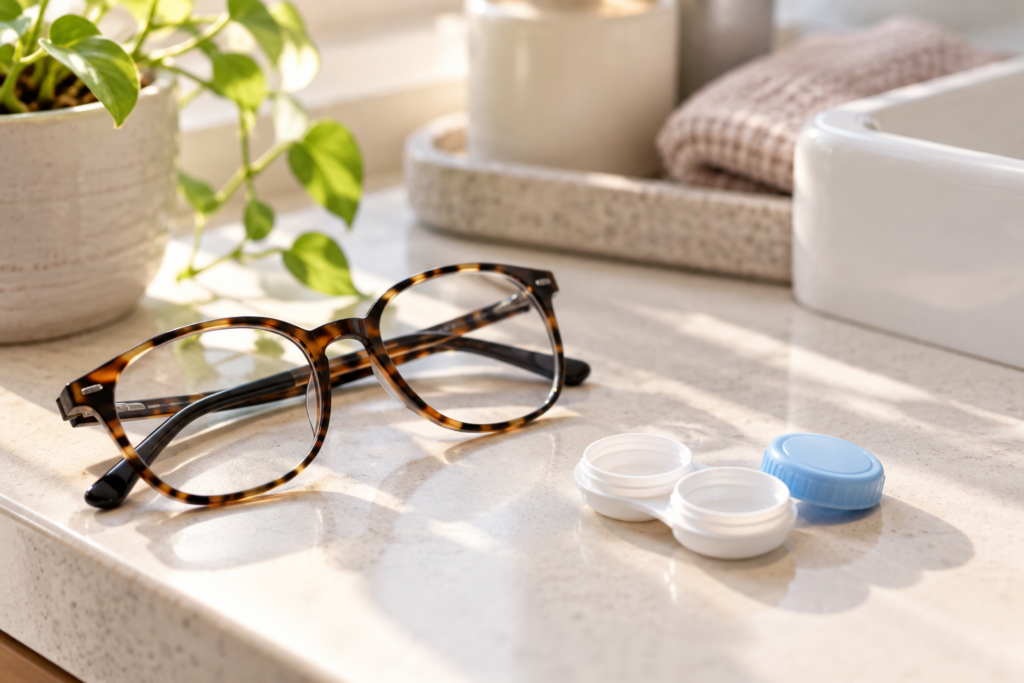
Reading glasses are a straightforward way to sharpen close-up vision. Multifocal contacts can be useful when you want access to near, intermediate and distance vision throughout the day.
| Everyday Situation | Multifocal Contact Lenses | Reading Glasses |
| Phone, Menus and Labels | Near vision is available without reaching for another pair of glasses | Put them on when close-up detail is needed |
| Computer Work | Can support intermediate and near vision alongside distance vision | May suit close work, depending on the prescription and working distance |
| Sport and Exercise | Stay on the eye and leave the face free of frames | Usually less practical during active movement |
| Driving and Navigation | Can support distance vision while allowing you to check displays or navigation | May still be useful for close-up tasks before or after driving |
| Socialising and Travel | Can reduce the need to carry and switch between glasses | Simple to carry and use when reading is needed |
Some people still use reading glasses with multifocal contacts for very small print, prolonged close work or certain low-light situations. The most practical setup depends on your prescription and the visual tasks you care about most.
What To Expect From A Multifocal Contact Lens Fitting
A multifocal fitting starts with your prescription, eye health and everyday visual demands. Your optometrist can select a lens design to trial, then review the fit, comfort and quality of vision and make refinements where needed.
Trialling & Refining Your Multifocal Lenses
During the fitting, your optometrist can check how the lens sits on the eye and how well you see at the distances that matter in your day. The first lens can be adjusted if near vision, computer distance or far vision needs more support. Bayside Eyecare allows around 30 minutes for a contact lens fitting appointment, giving you time to discuss your priorities and trial an appropriate lens.
Book A Multifocal Contact Lens Fitting In Brighton
Changes to reading vision are a normal part of ageing. A multifocal contact lens fitting can show how well different lens designs support your near, intermediate and distance vision across the tasks that matter most to you.
Book a multifocal contact lens fitting with Bayside Eyecare in Brighton today. Your optometrist can assess your prescription, eye health and everyday visual priorities, then trial suitable lenses and refine the fit based on your comfort and vision.
Multifocal Contact Lens FAQs
Can Anyone Wear Multifocal Contact Lenses?
Many adults with presbyopia can wear multifocal contact lenses. Suitability depends on your prescription, eye health, tear film, visual priorities and comfort. An optometrist can assess these factors and recommend an appropriate lens design.
How Long Does It Take To Get Used To Multifocal Contacts?
Adjustment time varies. Some people adapt quickly and others need more time or a small lens or prescription change. Follow-up appointments allow your optometrist to check everyday comfort and vision and make refinements when needed.
Can You Wear Contact Lenses If You Need Reading Glasses?
Yes. Multifocal contact lenses are designed to support people who need near vision correction as well as distance or intermediate vision. Your optometrist can assess whether a multifocal design suits your prescription and daily visual needs.
Can I Still Use Reading Glasses With Multifocal Contacts?
Yes. Some people keep reading glasses for very small print, prolonged close work or dim lighting. Your optometrist can explain whether occasional reading-glasses use makes sense alongside your multifocal contact lenses.