Kids Eye Tests
Our children use vision to explore the world and learn just about everything. It’s important to have your child’s eyesight examined, particularly at key moments in their lives.
These milestones include when they turn three and a half years old and then before starting their formal schooling. It’s recommended to get further examinations after a few years of school, then again before high school begins. Finally, you should have your child tested as they prepare to commence VCE or IB.
Give your child the best opportunities to learn by ensuring their eyesight is the best it can be.
Why Get Regular Eye Tests for Your Children
The vast majority of learning in schools is through visual communication, meaning that your child will be at a significant disadvantage if they struggle with their eyesight. That’s why an eye test for children is so important.
While a single kid’s eye test can help identify problems early on, children’s eyes are constantly developing. By getting regular eye tests, you can rest assured that your child’s vision is always at its best.
Many Australian children have undiagnosed eye problems because they don’t know any different, so they are unlikely to verbalise when they are struggling. The only way to know for sure is through a professional eye test.
Common Eye Conditions and How to Recognise Them
Some common eye conditions include strabismus (more commonly known as crossed eyes), astigmatism, short-sightedness, long-sightedness and amblyopia (lazy eye).
A few of the most common signs are straining eyes or head tilting to see better, closing one eye while reading or watching television, as well as regularly getting too close to objects.
One of the more serious signs is a white reflex in the pupil, particularly noticeable in photographs. This is often a sign of a much more serious issue and should be investigated by an optometrist immediately.
Children rarely say their vision is blurry, especially if only one eye is affected.
Our articles on the Top 10 warning signs of vision problems in children and what can cause blurry vision in a child cover these in more detail.
Bayside Eyecare Difference
We all want the best for our children, which is why choosing experienced optometrists is important. Our Bayside Eyecare optometrists, Rebecca Jamieson, Ally Li and Audrey Lee, all examine children and have postgraduate training in paediatric eye care and Behavioural Optometry. Together, they support children with everything from vision-related learning challenges and binocular vision problems to myopia control. All three are members of the Australasian College of Behavioural Optometry.
When should my child have an eye test?
An eye examination can be done at any age. If you have concerns about your child’s vision, or there is a family history of eye conditions, there is no need to wait.
If there are no concerns, around 3 to 3.5 years is a good age for a first eye examination. This gives time to pick up any issues before your child starts school.
Our optometrists use age-appropriate tests, so babies, toddlers and children who can’t yet read letters can all be examined.
What happens at a kids eye test
A children’s eye examination takes up to 45 minutes. Children who can’t read letters yet are tested with pictures, shapes and games, so they don’t need to know their alphabet.
The examination checks how clearly your child sees, how well their eyes work together and focus, and the health of their eyes.
The optimal time for an appointment is dependent on your child’s age. For school children, we recommend after school hours, as fatigue will make it easier to detect potential problems. Younger children are best seen when they are most alert.
Cost and Medicare
A children’s eye examination attracts a Medicare rebate. You pay for the examination at the end of the appointment, and we lodge the Medicare claim for you, so the rebate is paid straight back into your bank account. There is a gap between the fee and the rebate.
What is Behavioural Optometry?
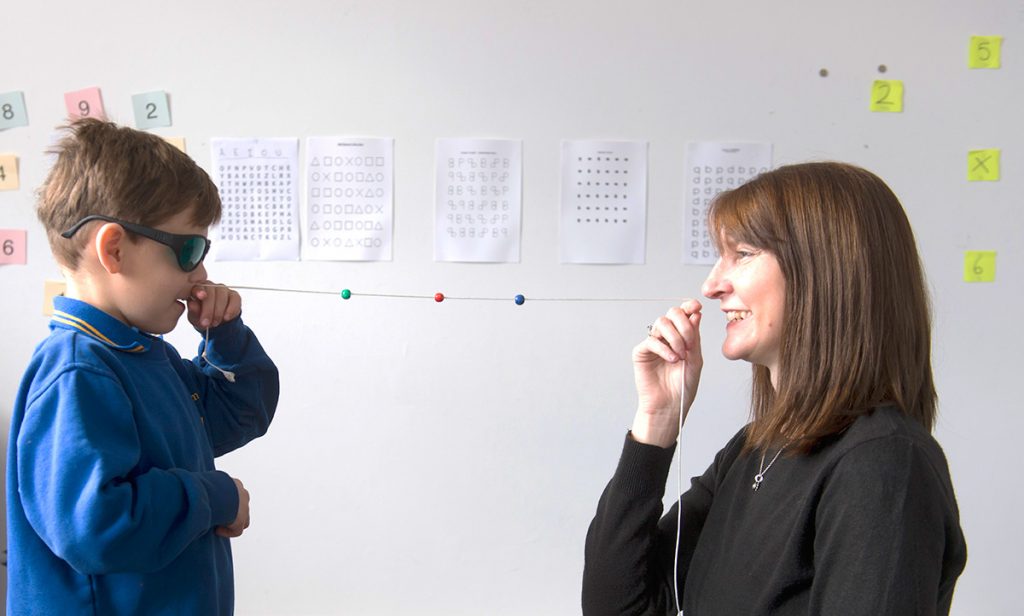
Behavioural optometry isn’t just about assessing a child’s eyesight. Bayside Eyecare is a Brighton optometrist that recognises some children need more than just a prescription for glasses. We investigate your child’s visual skills and the effectiveness of visual learning in order to work out how your child’s eyes and brain work together to create vision.
In addition to glasses, your child might be given visual exercises in order to make sure their visual system is functioning optimally in the classroom.
If your child is having difficulties reading or learning, we recommend a visual perceptual assessment. This assessment will explore how your child’s brain processes visual information, allowing you to make the best decisions going forward.
Kids Eye Test FAQs
Are kids eye tests free?
Not fully. A children’s eye examination attracts a Medicare rebate, and we lodge the claim for you on the day, but there is a gap payment.
When should my child have their first eye test?
Around 3 to 3.5 years if there are no concerns. If you notice anything unusual, or there is a family history of eye conditions, book sooner.
Can toddlers have an eye test?
Yes. We use tests suited to your child’s age, so they don’t need to talk or read to be examined.
How long does a kids eye test take?
Up to 45 minutes.
How often should children have their eyes tested?
Your optometrist will recommend how often based on your child’s eyes. Our article on how often you should get your eyes checked covers this in more detail.
Do I need a referral?
No referral is needed. If your child’s teacher, tutor, occupational therapist, speech therapist or a previous optometrist has raised concerns, please bring any notes or reports along. They help us understand your child’s needs.
Book an Appointment
Bayside Eyecare provides stress-free eye tests for children. Speak to our friendly team on (03) 9909 5329 or book an appointment online today.
Download Forms
 Child’s Details for Parent Form
Child’s Details for Teacher Form
Contact Us
Conveniently located in Brighton, Bayside Eyecare is proud to serve families in Melbourne’s Bayside suburbs.
Book a consultation with one of our optometrists today!